Playout: The Art of Playful Typography in Modern Design
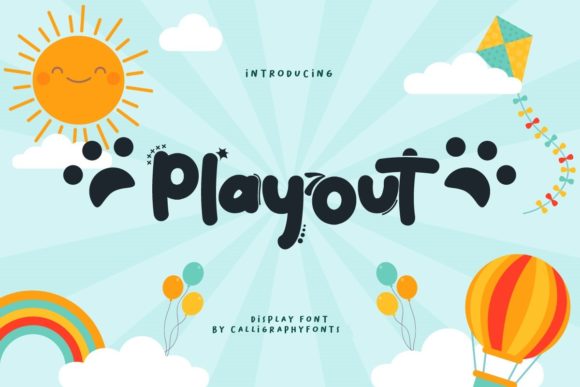
In the vast landscape of digital and print design, typography serves as the voice of visual communication. It dictates tone, sets the mood, and guides the reader’s eye through a composition. While serif fonts often convey tradition and sans-serifs suggest modernity, there exists a distinct category of typefaces designed to evoke emotion, whimsy, and approachability. Among these, Playout stands out as a distinctive choice for designers seeking to inject personality into their work. Described as a cute, paint-brushed display font, Playout offers more than just aesthetic appeal; it provides a tool for creating immediate emotional connections with audiences ranging from young children to creative professionals.
This article explores the nuances of using Playout in various design contexts, examining its characteristics, practical applications, and the strategic advantages it brings to branding, education, and entertainment. By understanding how this specific typeface functions within a broader design ecosystem, creators can make informed decisions that enhance their projects' effectiveness and visual harmony.
The Aesthetic Character of Playout
To understand the utility of any font, one must first appreciate its visual DNA. Playout is categorized as a display font, which means it is intended for use at larger sizes where its unique features can be fully appreciated. Unlike body text fonts, which prioritize legibility over long periods of reading, display fonts are designed to grab attention and communicate a specific vibe instantly.
The defining characteristic of Playout is its paint-brushed style. This mimics the organic, irregular edges found in hand-painted lettering. In an era dominated by pixel-perfect vector graphics and rigid geometric forms, the slight imperfections and fluid lines of a brush stroke introduce a sense of humanity and warmth. The "cute" classification suggests rounded terminals and soft curves, avoiding sharp angles that might feel aggressive or cold. This makes the font inherently friendly and inviting.
When you incorporate Playout into a design, you are not just selecting letters; you are selecting a texture. The visual weight of the strokes varies slightly, simulating the pressure of a real brush. This adds depth to flat designs, giving them a tactile quality that resonates with viewers on a subconscious level. For designers working in sectors where trust and comfort are paramount, such as childcare or wellness, this subtle psychological cue is invaluable.
Strategic Applications in Branding and Marketing
One of the most significant areas where Playout excels is in brand identity creation. Businesses today are moving away from sterile, corporate aesthetics toward more authentic and relatable personas. A logo or header featuring Playout can signal that a brand is accessible, fun, and perhaps a bit unconventional.
- Food and Beverage: Cafes, bakeries, and snack brands often use playful typography to suggest homemade quality and indulgence. Playout’s brush-stroke aesthetic pairs well with imagery of fresh ingredients or artisanal processes.
- Lifestyle and Wellness: Brands focusing on mindfulness, yoga, or creative hobbies benefit from the calming yet energetic feel of the font. It suggests activity without aggression.
- Educational Platforms: Online learning tools for younger demographics require interfaces that do not feel intimidating. Using Playout for headings and call-to-action buttons can reduce cognitive load and make the learning experience feel like play.
Consider a scenario where a small business owner is launching a line of handmade crafts. Using a standard sans-serif font might make the product look generic. However, using Playout for the packaging labels immediately communicates that these items are made with care and creativity. The font becomes part of the product story, reinforcing the value proposition of uniqueness and handcrafted quality.
Enhancing User Experience in Digital Interfaces
In the realm of user interface (UI) and user experience (UX) design, typography plays a crucial role in navigation and engagement. While body text should remain neutral, headers and interactive elements offer opportunities for stylistic expression. Playout can be strategically deployed in apps and websites to create moments of delight.
For instance, in gaming applications, particularly those targeted at casual players or children, the font used for menus, scoreboards, and character names contributes significantly to immersion. Playout’s dynamic strokes can mimic the energy of gameplay, making the interface feel alive. When a user sees "Play Now" rendered in a font that looks like it was painted with enthusiasm, it subconsciously encourages interaction.
Furthermore, in email marketing and social media graphics, where attention spans are short, visual hierarchy is key. A headline set in Playout will naturally draw the eye due to its irregular shapes and artistic flair. This allows marketers to break through the noise of crowded feeds. However, a critical consideration here is balance. Because Playout is a strong visual element, it should be paired with simpler, highly legible fonts for secondary information. A common best practice is to use Playout for titles and keywords, while relying on a clean sans-serif for detailed descriptions or terms and conditions.
Practical Considerations for Implementation
While the benefits of using Playout are clear, successful implementation requires an understanding of its limitations and technical constraints. Display fonts, by nature, have specific rules regarding usage to maintain their integrity and readability.
Kerning and Spacing
Hand-lettered styles often require careful adjustment of spacing between characters, known as kerning. Because each letter in Playout has unique contours, default spacing may result in letters clashing or floating too far apart. Designers should manually adjust kerning pairs to ensure a balanced visual rhythm. Poor kerning can make a professional design look amateurish, undermining the effort put into the layout.
Contrast and Pairing
The success of any typographic hierarchy depends on contrast. Since Playout is decorative and bold, it needs a contrasting partner. Good pairings typically include simple geometric sans-serifs or clean slab serifs. The simplicity of the companion font allows Playout to shine without competing for attention. Avoid pairing it with other script or display fonts, as this creates visual clutter and reduces readability.
Legibility at Small Sizes
As a display font, Playout is not suitable for small body text. At reduced sizes, the intricate details of the brush strokes can become muddy or illegible, especially on lower-resolution screens. It is essential to reserve Playout for headlines, logos, banners, and large graphic elements. For paragraphs of text, always revert to a font designed for readability. Ignoring this guideline can lead to poor accessibility standards, excluding users who rely on clear, high-contrast text.
Trends and Future Relevance
The trend toward "handmade" aesthetics in digital design shows no signs of slowing down. As AI-generated content becomes more prevalent, there is a growing consumer desire for content that feels human, imperfect, and authentic. Fonts like Playout tap into this desire by simulating human touch. They bridge the gap between digital precision and analog charm.
Educators and creators are increasingly recognizing the power of visual tone in engaging learners and audiences. The integration of playful typography in educational materials helps lower anxiety and increases engagement. Similarly, in the business world, startups and creative agencies are using such fonts to differentiate themselves in saturated markets. The ability to convey personality quickly is a competitive advantage, and typography is one of the fastest ways to achieve this.
Moreover, the versatility of Playout extends beyond traditional media. It is effective in motion graphics, where the dynamic nature of the letters can be animated to follow the flow of the brush stroke. This adds a layer of sophistication to video content, whether it is for YouTube intros, Instagram stories, or presentation slides.
Conclusion
Playout is more than just a font; it is a design asset that brings warmth, personality, and a touch of artistry to any project. Its paint-brushed, cute aesthetic makes it an ideal choice for industries focused on creativity, childhood, and community. By understanding its strengths and respecting its limitations, designers can leverage Playout to create compelling visual narratives that resonate with their audience.
Whether you are designing a logo for a new bakery, creating assets for a children's app, or simply adding a lovely touch to a personal blog, Playout offers a reliable and expressive solution. In a digital world that often feels rigid, allowing your typography to play can make all the difference. Embrace the organic, invite the whimsy, and let Playout help your designs stand out with genuine character.