Dash Lines: A Whimsical Display Font for Modern Design Projects
In the crowded landscape of digital and print design, finding a typeface that strikes the right balance between professionalism and playfulness can feel like searching for a needle in a haystack. Most designers are familiar with the standard workhorses—clean sans serifs for body text or elegant serifs for editorial layouts. But what happens when you need to inject personality, energy, and a touch of magic into your visual hierarchy? This is where Dash Lines steps in as a versatile solution.
Designed as a fun and brushed display font, Dash Lines offers a modern yet whimsical style that immediately captures attention. It is not just another decorative typeface; it is a strategic design asset capable of immersing your designs into a magical world without sacrificing legibility or brand integrity. Whether you are crafting a brand identity for a startup, designing packaging for a boutique product, or creating engaging social media graphics, understanding how to leverage this creative font effectively can elevate your projects from ordinary to extraordinary.
Visual Character and Personality
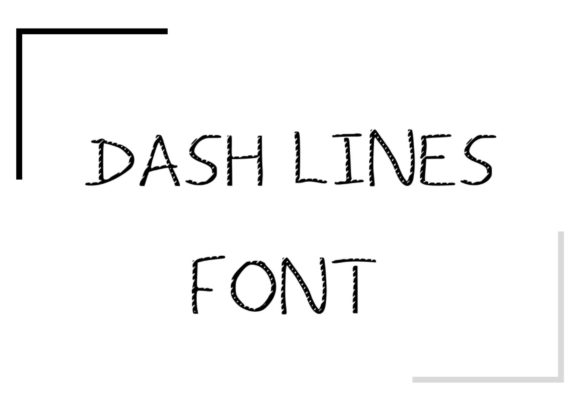
To understand why Dash Lines works so well across various mediums, we must first look at its visual architecture. Unlike rigid geometric fonts or overly ornate script fonts, Dash Lines features a distinct "brushed" aesthetic. The strokes mimic the organic flow of a brush, but they are controlled and consistent enough to maintain readability. This creates a unique tension between handcrafted warmth and digital precision.
The personality of the typeface is inherently cheerful and dynamic. The varying stroke weights and the slightly irregular edges give it a human touch, reminiscent of handwritten fonts but with the stability required for larger display applications. It avoids the pitfalls of being too childish or too formal. Instead, it sits comfortably in a sweet spot that appeals to adults 20–50 who appreciate creativity but still demand clarity. When used correctly, Dash Lines does not shout; it invites the viewer into a narrative, making it an excellent choice for storytelling in editorial design or brand identity systems.
This whimsical nature allows it to break through visual noise. In a feed filled with polished, sterile corporate imagery, a headline set in Dash Lines stands out because it feels alive. It suggests movement and energy, qualities that are essential for capturing audience engagement in today’s fast-paced digital environment. However, its appeal is not limited to casual contexts. With the right pairing, it can lend a sophisticated yet approachable vibe to high-end packaging design or luxury lifestyle branding.
Strategic Applications Across Creative Industries
One of the greatest strengths of Dash Lines is its adaptability. While it is technically a display font, meaning it is intended for large sizes rather than long paragraphs of body copy, its utility extends far beyond simple headlines. Here is how different professionals can integrate this typeface into their workflows:
- Branding and Logo Design: For startups in the tech, wellness, or creative sectors, Dash Lines can serve as a memorable logotype or a key accent element within a wordmark. Its unique character helps establish immediate recognition, contributing to strong brand recall.
- Packaging Design: On shelves, products compete for seconds of attention. A commercial font like Dash Lines can make a package pop. Imagine a craft beer label, a cosmetic jar, or a gourmet snack box. The brushed texture adds tactile quality to the visual experience, suggesting artisanal care even if the product is mass-produced.
- Social Media Graphics: Content creators and marketers often struggle to maintain consistency while staying fresh. Using Dash Lines for quotes, announcements, or event dates on Instagram or Pinterest provides a cohesive visual thread that feels personal and engaging.
- Web Design: In modern typography, using display fonts for hero sections or call-to-action buttons can significantly improve click-through rates. Dash Lines works beautifully as a hero headline, drawing the eye immediately to the value proposition of a landing page.
- Event and Editorial Design: For conference banners, magazine covers, or newsletter headers, the font adds a layer of excitement. It signals to the reader that the content inside is vibrant and worth exploring.
It is crucial to remember that Dash Lines is a premium font designed for impact. It should not be used for dense blocks of text. Its strength lies in its ability to act as a visual anchor. By reserving it for titles, subheads, and short phrases, you ensure that its whimsical charm remains a feature, not a distraction.
Practical Guidance for Implementation
Integrating Dash Lines into your projects requires more than just dragging and dropping the file into your software. To achieve professional results, you need a strategic approach to selection, pairing, and testing.
Evaluating Project Fit
Before purchasing or downloading the license, ask yourself: Does this project need energy? If your goal is to convey seriousness, legal compliance, or traditional authority, a classic serif or neutral sans serif font might be more appropriate. Dash Lines shines when the message is about creativity, fun, innovation, or human connection. Evaluate the tone of your brand voice. If your brand is witty, bold, or imaginative, Dash Lines is likely a strong candidate.
The Art of Font Pairing
A common mistake designers make is letting a display font do all the heavy lifting. The secret to effective font pairing is contrast. Because Dash Lines has a strong, expressive character, it pairs best with clean, understated typefaces. A simple sans serif font like Helvetica, Roboto, or Lato provides the perfect neutral background that allows Dash Lines to stand out. Conversely, a delicate serif font can add a touch of elegance if you are aiming for a more refined whimsical look.
When testing pairings, consider the following rules:
- Limit Your Palette: Stick to two, maximum three typefaces per project. Let Dash Lines be the star, and use the supporting font for readability.
- Match Weight and Scale: Ensure the visual weight of your body text complements the boldness of the display font. If Dash Lines is thick and heavy, your body text should have sufficient contrast, perhaps using a lighter weight to prevent the layout from feeling cluttered.
- Test at Small Sizes: Even though it is a display font, check how it looks when scaled down. Does it remain legible? Does the "brushed" detail get lost or become muddy?
Readability and Accessibility Considerations
While Dash Lines is visually striking, designers must always prioritize accessibility. Ensure that the color contrast between the text and the background is high enough for users with visual impairments. Avoid placing Dash Lines over busy images or complex patterns unless you use a solid overlay or drop shadow to enhance legibility. Remember, beauty should never come at the cost of comprehension.
Licensing and Commercial Use
Finally, always review the included styles and licensing terms. As a creative font, Dash Lines may come in various weights or variations (such as regular, bold, or italic). Check which styles are included in your purchase to ensure you have the flexibility needed for your hierarchy. Furthermore, verify the commercial usage rights. Whether you are designing for a small business owner or a large corporation, ensuring you have the correct design assets license protects you from legal issues and respects the work of the type designer.
By treating Dash Lines not just as a decoration but as a strategic communication tool, you can unlock its full potential. It offers a bridge between the structured world of modern typography and the boundless imagination of artistic expression. When used with intention, it transforms static designs into immersive experiences, helping your brand connect with audiences on a deeper, more emotional level.