Coin Play: A Functional Typographic Resource for Educational and Creative Projects
In the landscape of digital typography, few categories are as specialized yet as visually demanding as educational and children’s fonts. These typefaces must balance legibility with approachability, ensuring that young readers or learners are not intimidated by complex letterforms while still maintaining a sense of structure. Coin Play emerges as a distinct entry in this niche, offering a handwritten aesthetic designed specifically for contexts involving counting, financial literacy, and playful learning. For educators, curriculum designers, and content creators focused on early childhood development, understanding the specific utility and technical constraints of such a font is essential before integrating it into professional workflows.
Defining the Aesthetic and Purpose
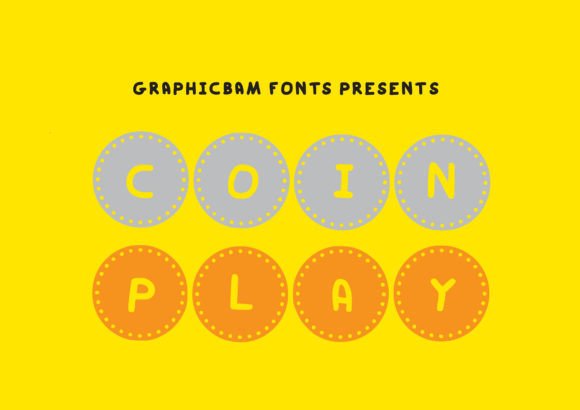
The core identity of Coin Play is rooted in its visual language. It utilizes a playful, childlike font style characterized by rounded sides and a handwritten feel. This design choice is not merely decorative; it serves a psychological function. Rounded, soft-edged typography reduces cognitive friction for beginners, making text appear more inviting and less rigid than standard sans-serif or serif fonts. The name itself suggests a thematic connection to currency, coins, and perhaps even the whimsical notion of "pirate gold," which can be leveraged in storytelling or themed educational units.
However, the strength of Coin Play lies not just in its appearance but in its targeted application. It is explicitly positioned for spelling out concepts related to counting and money. This specificity means that while it may lack the versatility required for body text in a novel or a corporate report, it excels in high-impact display scenarios where immediate engagement is necessary. The font acts as a visual cue, signaling to the audience—particularly children—that the content is interactive, fun, and accessible.
Technical Specifications and File Structure
From a practical standpoint, the distribution format of Coin Play is straightforward, including both OTF (OpenType Font) and TTF (TrueType Font) files. This dual-format support ensures broad compatibility across various operating systems, design software, and web environments. For professionals who switch between macOS and Windows ecosystems, or who need to embed fonts in PDFs for print, having both formats available eliminates potential rendering issues.
It is crucial to note the character set limitations inherent in many display fonts of this nature. Coin Play includes uppercase letters, numbers, and limited punctuation symbols. While this might seem restrictive at first glance, it is a common and often intentional constraint in fonts designed for specific thematic purposes. By focusing on uppercase and numerals, the designer ensures that the primary use cases—such as labeling price tags, creating number lines, or highlighting key terms—are supported without compromising the integrity of the glyph shapes. Users should be aware that lowercase letters are likely absent or substituted, which dictates how the font can be integrated into mixed-case sentences. In such cases, it is best used as an accent rather than a primary text source.
Evaluating Usability in Professional Contexts
When assessing Coin Play for real-world application, several factors come into play regarding usability, flexibility, and consistency.
- Educational Materials: For teachers and homeschooling parents, Coin Play offers a ready-made solution for creating engaging worksheets. The inclusion of numbers is particularly valuable for math-related crafts. When designing flashcards for addition or subtraction, using a font that mimics handwriting can help bridge the gap between abstract numerical concepts and tangible learning tools.
- Craft and DIY Projects: The font’s association with shiny gold and pirate themes makes it ideal for party invitations, classroom decorations, or scrapbooking elements. Its rounded sides ensure that when cut out from cardstock or printed on vinyl, the letters maintain their friendly aesthetic without sharp corners that might detract from the playful vibe.
- Digital Content Creation: Bloggers and social media managers targeting parenting or education niches can use Coin Play for headers and pull quotes. However, due to the lack of lowercase and limited punctuation, it should be paired with a highly legible sans-serif font for any accompanying explanatory text. This contrast enhances readability while allowing the headline to capture attention.
Strengths and Practical Value
The primary strength of Coin Play is its thematic cohesion. It does not try to be everything to everyone; instead, it delivers a specific mood effectively. The "friendly and joyful" tone is consistent across all included glyphs. This consistency is vital for brand or project identity. If you are building a series of educational videos or a printable pack about money management for kids, using a font that feels cohesive helps establish trust and familiarity with the young audience.
Furthermore, the font’s simplicity aids in production speed. Because it requires no complex kerning adjustments typical of full alphabets, designers can quickly assemble titles and labels. For freelancers working under tight deadlines, this efficiency is a significant advantage. The font allows for rapid prototyping of ideas, whether that involves mocking up a classroom poster or designing a quick infographic for a blog post.
Potential Limitations and Considerations
No tool is without its constraints. The most notable limitation of Coin Play is its restricted character set. Users attempting to write full paragraphs in this font will encounter significant frustration due to the absence of lowercase letters and certain punctuation marks. This is not a flaw in quality but a design choice that defines the font’s boundaries. Professionals must plan their layouts accordingly, ensuring that Coin Play is reserved for headlines, labels, and short phrases.
Additionally, the "handwritten" style may not suit all educational philosophies. Some modern pedagogical approaches emphasize clean, minimalist aesthetics to reduce visual clutter. In such contexts, the playful nature of Coin Play might be perceived as distracting rather than helpful. It is essential to align the font choice with the overall visual strategy of the project. For traditional or theme-based learning environments, however, it remains a strong candidate.
Comparative Context and Alternatives
The prompt mentions checking out the ‘Play’ font, which is part of a full font set with five weights. This suggests that Coin Play is one variant within a broader ecosystem. For users who require more typographic range, the ‘Play’ font family might offer greater flexibility through its multiple weights, which can provide hierarchy in longer documents. However, if the specific goal is to evoke the tactile, playful feeling of coins and childhood learning, Coin Play’s unique styling may be superior to the more generic options found in a multi-weight family. Evaluating these options side-by-side allows creators to choose based on the specific emotional resonance they wish to achieve.
Conclusion and Final Assessment
Coin Play is a niche but effective tool for those operating at the intersection of education, creativity, and design. It is not a general-purpose typeface, nor should it be treated as one. Its value proposition lies in its ability to instantly communicate joy, accessibility, and thematic relevance. For professionals creating materials around counting, money, or early literacy, Coin Play provides a reliable, visually appealing asset that simplifies the design process.
When considering whether to incorporate Coin Play into your workflow, ask yourself if the project benefits from a handcrafted, playful aesthetic. If the answer is yes, and the usage is limited to display text, headings, or thematic accents, then Coin Play is a worthy addition to your resource library. Its combination of rounded forms, numeric support, and thematic naming makes it a precise instrument for specific creative tasks. By respecting its limitations and leveraging its strengths, creators can produce materials that are not only informative but also emotionally engaging for their target audiences.