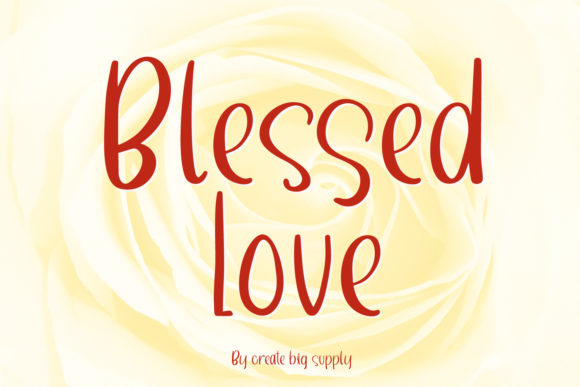
Blessed Love Font Evaluation
In the expansive landscape of digital typography, selecting the right typeface is rarely a purely aesthetic decision; it is a strategic choice that influences user experience, brand perception, and emotional resonance. Among the myriad options available to designers, Blessed Love has emerged as a notable contender within the casual display category. Characterized by its trendy, sweet, and lively style, this font offers a distinct visual personality that can significantly alter the tone of a design project. For professionals evaluating typefaces for branding, social media content, or editorial layouts, understanding the specific utility and limitations of Blessed Love is essential.
Understanding the Design Language of Blessed Love
To evaluate Blessed Love effectively, one must first deconstruct its typographic DNA. It is classified as a display font, which generally means it is designed to be used at larger sizes rather than for extensive body text. Its primary characteristics include a casual structure and a "sweet" aesthetic, achieved through rounded terminals, soft curves, and an overall sense of approachability. The term "full of life" in its description refers to the dynamic rhythm of the letterforms, which avoid rigid geometric constraints in favor of a more organic, hand-drawn feel.
This design philosophy positions Blessed Love firmly in the realm of friendly, informal communication. It does not seek to command authority through stark minimalism or tradition; instead, it invites engagement through warmth and charm. The font’s trendy nature suggests it aligns with contemporary design movements that favor authenticity and personal touch over corporate rigidity. When placed on a page, Blessed Love acts as a visual cue, signaling to the reader that the content is lighthearted, accessible, and emotionally resonant.
Strategic Applications and Use Cases
The evaluation of any font must consider where it performs best. Blessed Love shines in contexts where emotional connection is prioritized over informational density. Because of its display nature, it is ill-suited for long-form paragraphs or technical documentation. However, it excels in the following scenarios:
- Branding for Lifestyle Brands: Businesses in the beauty, wellness, artisanal food, or boutique retail sectors often rely on visuals that evoke comfort and joy. Blessed Love can serve as a primary logo font or a key headline element that reinforces these brand values.
- Social Media Graphics: In the fast-scrolling environment of platforms like Instagram or Pinterest, fonts need to grab attention quickly while conveying a mood. The "brightening up" capability of Blessed Love makes it ideal for quotes, event announcements, or promotional banners where a cheerful tone is desired.
- Event Stationery and Invitations: For weddings, baby showers, or casual parties, the sweet and casual style of Blessed Love complements themes of celebration and intimacy. It pairs well with floral elements and pastel color palettes, enhancing the thematic cohesion of the design.
- Product Packaging: Small-scale packaging for items like candles, bath bombs, or handmade crafts benefits from the unique character of display fonts. Blessed Love can help a product stand out on a shelf by offering a human-centric alternative to generic sans-serifs.
Benefits of Choosing Blessed Love
Selecting Blessed Love offers several practical advantages for designers seeking to differentiate their work. First, its distinctive style ensures high memorability. In a market saturated with neutral, safe typefaces, a font with such a clear personality helps brands establish a unique identity. Second, the font’s versatility within its niche allows for creative freedom. It can be paired with clean, minimalist sans-serif fonts for body text, creating a balanced contrast between the expressive headlines and readable information. This combination allows designers to maintain hierarchy without sacrificing style.
Furthermore, the "sweet" and "casual" attributes reduce the cognitive load for the viewer. People are naturally drawn to designs that feel welcoming and non-threatening. By using Blessed Love, designers can lower barriers to engagement, making complex or serious topics feel more approachable when appropriate. This psychological effect is particularly valuable in marketing materials aimed at younger demographics or communities that value authenticity and transparency.
Tradeoffs and Limitations
However, no typeface is universally applicable, and Blessed Love comes with significant tradeoffs that must be considered during the selection process. The most critical limitation is legibility at small sizes. As a display font with stylized forms, the characters may become difficult to read when scaled down. Using Blessed Love for navigation menus, footers, or dense text blocks will likely result in poor user experience and accessibility issues.
Additionally, the strong personality of the font can clash with certain brand identities. If a company operates in a conservative industry, such as finance, law, or healthcare, the casual and sweet style of Blessed Love may undermine perceived credibility. In these contexts, the font might appear unprofessional or frivolous. Designers must carefully weigh the emotional impact of the typeface against the required tone of voice. Overuse of such a distinctive font can also lead to visual fatigue, causing the design to look cluttered or childish if not balanced with ample white space and complementary elements.
Comparative Considerations and Alternatives
When evaluating Blessed Love, it is helpful to compare it with alternatives in the same category. Fonts like Pacifico or Dancing Script offer similar handwritten aesthetics but may differ in weight and flow. Pacifico is bolder and more uniform, while Dancing Script is thinner and more elegant. If a designer requires a display font that is equally casual but slightly more structured, they might consider Lobster, which has a retro flair that differs from the modern sweetness of Blessed Love.
For projects requiring a balance between friendliness and professionalism, pairing Blessed Love with a neutral sans-serif like Open Sans or Roboto is a common strategy. This pairing mitigates the risk of the design feeling too whimsical by grounding it with reliable, readable body text. Conversely, if the goal is maximum readability with a touch of personality, a rounded sans-serif like Nunito might be a safer choice than a display font entirely.
Decision-Making Insights for Designers
Ultimately, the decision to use Blessed Love should stem from a clear understanding of the project’s goals. Designers should ask themselves whether the target audience responds to warm, informal cues. If the answer is yes, and the application is limited to headlines or short phrases, Blessed Love is a strong candidate. It provides a quick way to inject life and trendiness into a layout without requiring complex custom lettering.
Before finalizing the selection, it is advisable to test the font in context. Mockups should be reviewed at various sizes and alongside intended imagery to ensure harmony. Checking accessibility standards is also crucial, ensuring that contrast ratios and font weights meet minimum requirements for readability. By approaching Blessed Love with a critical eye toward its functional limits and emotional strengths, designers can make informed decisions that enhance both the aesthetic appeal and the effectiveness of their communications.
In conclusion, Blessed Love is a specialized tool in the designer’s arsenal. It is not a general-purpose typeface but a powerful accent that can elevate designs focused on lifestyle, creativity, and positive emotion. When used judiciously, it brightens up compositions and connects with audiences on a human level. However, its success depends entirely on appropriate application, balancing its sweet and lively style with the practical demands of clarity and context.