Why Sports Time Is the Ultimate Display Font for High-Energy Designs
In the fast-paced world of graphic design and digital content creation, typography is rarely just about readability. Sometimes, it’s about impact. It’s about capturing attention in a split second, conveying motion before a word is even fully read, and setting a tone that resonates with energy, competition, and excitement. This is where Sports Time steps onto the field as an undeniable powerhouse.
Sports Time is not merely a typeface; it is a visual statement. Designed specifically to evoke the thrill of the game, the rush of the finish line, and the boldness of athletic branding, this unique display font has become a go-to resource for designers who need to make a loud, clear declaration. Whether you are crafting a dynamic social media post, designing a poster for a local marathon, or creating a high-stakes presentation deck, understanding the nuances of Sports Time can elevate your work from standard to spectacular.
The Anatomy of Athletic Typography
To truly appreciate why Sports Time works so well across various mediums, we first need to look at what makes a font "sporty." Traditional serif fonts often convey tradition and stability—think of the logos of banks or law firms. Sans-serif fonts offer modernity and cleanliness. But sports? Sports demand aggression, speed, and dynamism.
Sports Time achieves this through distinct typographic features:
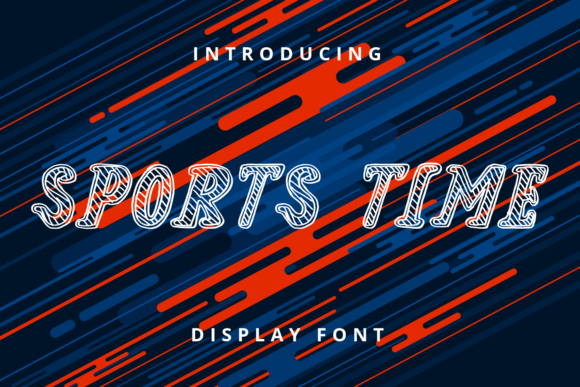
- Italicized Slant: Almost every character in the Sports Time family leans forward. In typography, this is known as obliquing or italicization. It creates a sense of forward momentum, mimicking the physical act of running or charging toward a goal.
- Bold Weight: The thick strokes provide presence. On a crowded stage or a cluttered webpage, thin fonts get lost. Sports Time demands to be seen.
- Condensed Structure: Many variations of the font are condensed, allowing designers to fit large headlines into tight spaces without sacrificing legibility. This is crucial for jersey numbers, scoreboard graphics, and compact UI elements.
- Sharp Angles: Unlike rounded, friendly fonts, Sports Time often utilizes sharp corners and aggressive cuts. These angles subconsciously signal precision, power, and competitive edge.
When you pair these characteristics together, you don’t just have text; you have a visual representation of adrenaline. That is the core value proposition of using Sports Time in your projects.
Versatility Beyond the Stadium
One common misconception is that sports-themed fonts are only useful for actual sporting events. While they are certainly perfect for team jerseys, stadium signage, and event posters, the utility of Sports Time extends far beyond the arena. Its aesthetic appeal lies in its ability to communicate urgency and importance, qualities that are valuable in many other industries.
Digital Design and Social Media
In the scrolling economy of Instagram, TikTok, and Facebook, you have less than a second to grab a user's attention. A static image with a standard font might blend into the feed. However, an image featuring Sports Time in a contrasting color stands out. It triggers a psychological response associated with action and news. For fitness influencers, gaming channels, or tech startups launching a new product, this font adds a layer of perceived energy and innovation to their visual identity.
Presentation and Corporate Pitching
Imagine you are pitching a new initiative that requires rapid execution or aggressive market penetration. Using a delicate script font might undermine your message. By incorporating Sports Time for key headers or call-out boxes, you subtly reinforce themes of strength, reliability, and forward-thinking leadership. It breaks up the monotony of bullet points and draws the eye to the most critical data points.
Crafting and Physical Merchandise
For crafters using cutting machines like Cricut or Silhouette, Sports Time offers excellent cut-ability. Because of its bold lines and lack of overly intricate internal details (counter-spaces), it translates beautifully to vinyl decals, t-shirt prints, and wooden signs. A custom gym banner, a motivational quote for a home office, or a personalized gift for a young athlete becomes instantly more professional and striking when rendered in this font.
Practical Considerations for Implementation
While Sports Time is a robust choice, effective design requires more than just picking a cool-looking font. Here are some practical tips to ensure you get the best results.
Contrast is Key
Because Sports Time is visually heavy, it needs room to breathe. Avoid placing it over busy backgrounds or complex textures. Solid colors, gradients, or blurred background images work best. If you must use a photograph, ensure there is enough contrast between the white (or light) text and the darker areas of the image. High-contrast combinations like black on yellow, white on navy blue, or red on gray are classic choices that complement the font's energetic vibe.
Pairing with Complementary Fonts
A common mistake is using only one font throughout a layout. To create a balanced hierarchy, pair Sports Time with a clean, neutral sans-serif for body text. Fonts like Helvetica, Roboto, or Open Sans provide a calm counterpoint to the aggressive nature of the display font. Use Sports Time for headlines, titles, and short impactful phrases. Use the secondary font for paragraphs, descriptions, and detailed information. This combination ensures your design remains readable while maintaining its energetic punch.
Kerning and Tracking
Display fonts often require manual adjustment of spacing. With Sports Time, you might find that increasing the tracking (letter-spacing) slightly can enhance readability, especially if the text is very small. Conversely, bringing letters tighter together can create a more intense, unified block of text suitable for large-scale banners. Always preview your text at the size it will actually appear in the final output to catch any awkward gaps or collisions.
Who Should Use Sports Time?
If you are asking whether this font fits your workflow, consider your goals. You should choose Sports Time if:
- You need to convey movement: Your project involves racing, fitness, travel, or rapid change.
- You want to command authority: You are designing for brands that want to appear strong, established, and dominant.
- You are targeting a youthful or active demographic: Teens, athletes, gamers, and fitness enthusiasts respond well to bold, dynamic aesthetics.
- You are working on limited space: You need a font that packs maximum visual weight into minimal horizontal real estate.
Conversely, you might want to avoid it if you are designing for a formal legal document, a luxury jewelry brand, or a healthcare pamphlet where calmness and clarity are prioritized over excitement.
Conclusion: Making Every Word Count
In design, every element serves a purpose. Sports Time is not just a decorative choice; it is a strategic tool. It bridges the gap between static text and dynamic emotion. By leveraging its inherent qualities of speed, strength, and boldness, designers can create assets that do more than inform—they inspire.
Whether you are a seasoned graphic designer building a brand identity for a new energy drink company, or a hobbyist making birthday cards for a soccer-loving nephew, Sports Time provides the versatility and impact needed to make your project shine. It reminds us that typography is alive, moving, and powerful. So, next time you open your design software, remember that the right font doesn't just say what you mean—it shows how you feel about it. And with Sports Time, you’re always ready for the win.