Grandtown: Adding Bold, Nostalgic Character to Your Design Projects
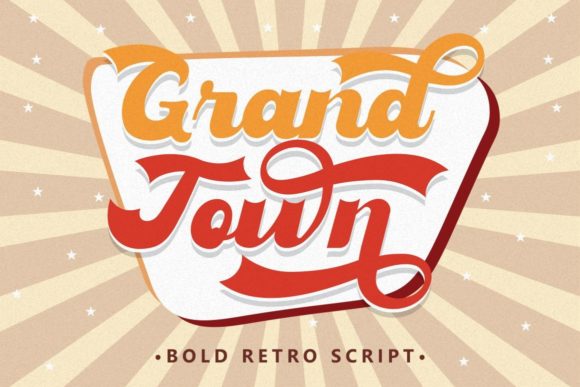
In a digital landscape saturated with clean sans-serifs and minimalist geometric typefaces, standing out often requires a deliberate departure from the ordinary. This is where Grandtown enters the conversation. It isn’t just another display font; it is a gorgeous and bold visual statement crafted specifically to give headlines, logotypes, and key design elements a stylish, undeniable touch. When you need text that reads as strong, confident, and dynamic while simultaneously injecting tons of nostalgic character into your work, Grandtown offers a unique solution that bridges the gap between retro charm and modern impact.
The appeal of Grandtown lies in its ability to evoke emotion without sacrificing readability. It captures the essence of vintage signage and classic advertising but refines it for contemporary interfaces and print materials. Whether you are designing a brand identity for a craft brewery, creating a poster for a music festival, or simply trying to make a blog header pop, this font provides the weight and personality needed to command attention immediately.
Why Choose Grandtown for High-Impact Headlines?
Display fonts are tools for emphasis, not body copy. Grandtown understands its role perfectly. Its heavy strokes and distinctive shapes are designed to be read at a distance or in large sizes, making it an ideal candidate for hero sections on websites, magazine covers, and social media graphics. The font’s dynamic nature means it doesn’t sit still; it has a rhythm and flow that guides the eye across the page.
One of the most significant advantages of using Grandtown is its versatility in tone. While it is undeniably bold, it carries a layer of warmth due to its nostalgic roots. Unlike stark, industrial typefaces that can feel cold or aggressive, Grandtown feels approachable yet authoritative. This balance is crucial for brands that want to appear established and trustworthy without looking outdated or stiff. It allows designers to leverage the power of "vibes" in typography—evoking the feeling of a bygone era while remaining firmly rooted in current design trends.
Real-World Applications Across Industries
Understanding where Grandtown shines best helps in deciding if it fits your specific project needs. Here are several scenarios where this font proves particularly effective:
- Hospitality and Food & Beverage: For breweries, distilleries, diners, or artisanal bakeries, atmosphere is everything. Grandtown’s nostalgic character pairs beautifully with imagery of handcrafted products, rustic textures, and warm lighting. Imagine a label for a small-batch hot sauce or a menu board for a retro-style burger joint; the font instantly communicates quality and tradition.
- Event Marketing and Entertainment: Concert posters, festival lineups, and theater programs benefit greatly from the dramatic flair of Grandtown. Its bold presence ensures that event names and dates are impossible to miss. The font’s dynamic energy mirrors the excitement of live events, making it a natural choice for promotional materials that need to generate buzz.
- Fashion and Lifestyle Brands: Modern fashion often plays with irony and nostalgia. A clothing brand aiming for a streetwear aesthetic or a vintage-inspired look can use Grandtown to create striking campaign visuals. It works exceptionally well for short phrases, slogans, or collection titles where brevity and punch are required.
- Digital Content Creation: In the age of scrolling, static images need to stop users in their tracks. YouTube thumbnails, Instagram carousels, and Pinterest pins often rely on large, readable text overlays. Grandtown’s high contrast and clear letterforms ensure that messages remain legible even when scaled down for mobile screens, provided they are used as headlines rather than paragraphs.
Maximizing Potential with PUA Encoding
A technical feature that significantly enhances the usability of Grandtown is its PUA (Private Use Area) encoding. For designers who aren't familiar with the term, this means that all the special glyphs, swashes, and alternative characters are mapped to specific codes within the font file itself. Rather than relying on complex ligature settings or external OpenType features that might not render consistently across all software, you can access these decorative elements directly through your keyboard or character map.
This accessibility is a game-changer for workflow efficiency. If you want to add a flourish to the end of a word or swap a standard 'A' for a more stylized version, you don’t need to hunt through menus. You simply select the corresponding code, and the glyph appears. This ease of access encourages experimentation, allowing designers to quickly test different variations and find the perfect combination for their layout. It lowers the barrier to entry for achieving a highly customized, bespoke typographic look.
Considerations for Effective Usage
While Grandtown is a powerful tool, like any display font, it requires thoughtful application to avoid common pitfalls. The primary consideration is scale. Because Grandtown is designed for impact, it loses much of its character when used in small sizes. Trying to set long passages of text in Grandtown will result in a dense, hard-to-read block that defeats the purpose of its elegant curves. Reserve it for titles, subtitles, pull quotes, and standalone words.
Pairing is another critical aspect of working with such a dominant typeface. Grandtown has enough personality to stand alone, but it often benefits from being paired with a neutral, understated font for supporting text. A simple sans-serif or a light serif can provide the necessary contrast, ensuring that the hierarchy of information remains clear. The boldness of Grandtown should be the star, while the supporting text acts as the stage.
Furthermore, consider the context of your audience. The nostalgic vibe of Grandtown may not align with industries seeking a hyper-modern, futuristic, or tech-forward aesthetic. For startups in AI or biotech, a cleaner, more abstract typeface might better communicate innovation. However, for brands leaning into heritage, craftsmanship, or emotional storytelling, Grandtown’s character is an asset rather than a liability.
Conclusion
Grandtown is more than just a font; it is a design element that brings confidence and style to any project. By leveraging its bold structure, nostalgic charm, and easy-to-access swashes, designers can create visuals that resonate deeply with audiences. Whether you are crafting a brand identity, designing an event poster, or enhancing digital content, Grandtown offers the perfect blend of strength and sophistication. It reminds us that typography is not just about conveying information—it is about setting a mood, telling a story, and creating a lasting impression.